
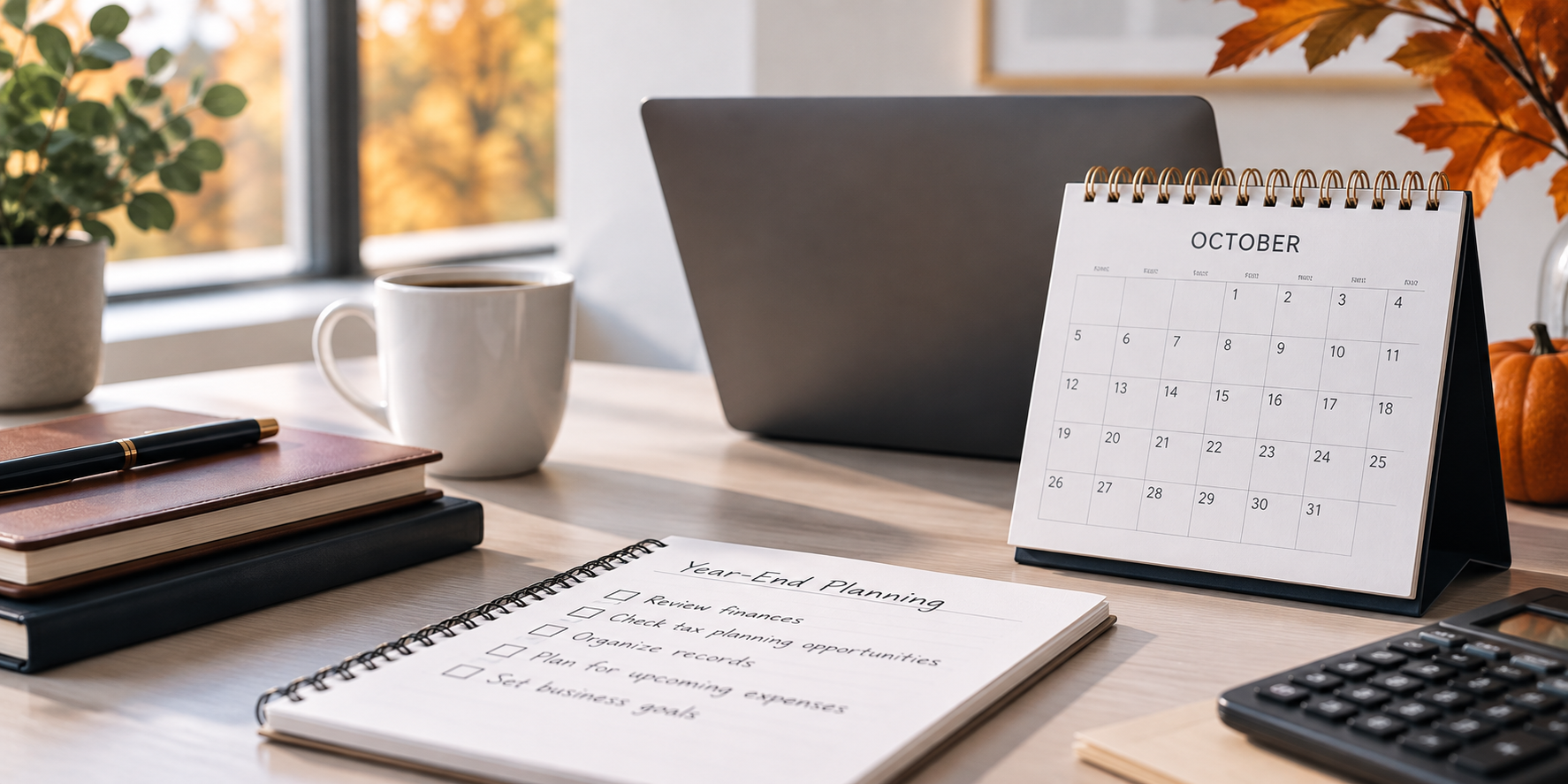
October is here, and the end of the year is getting closer. For many business owners, things start picking up now. You have customers to serve, employees to manage, and plans to finish before the holidays. With so much going on, it is easy to put your business finances aside until December.
But October is actually a great time to get ahead. Taking a closer look at your income, expenses, and taxes now can help you avoid surprises later.
Year-end tax planning does not have to be complicated. A few simple steps can help you understand where your business stands, prepare for upcoming expenses, and make better decisions before the year ends.
Take a Closer Look at Your Business Finances
Before you start planning for the end of the year, take time to see how your business is doing right now.
Start by reviewing your income and expenses from January through September. Are your sales where you expected them to be? Have your expenses increased? Did your business grow this year, or have things been slower than planned?
Reviewing these numbers can help you spot things you may have missed during your busiest months.
For example, your business might be bringing in more money than last year, but your expenses may have increased too. Maybe you spent more on supplies, hired additional employees, or invested in new equipment. These changes can affect how much profit your business actually keeps.
It is also worth reviewing any unpaid invoices or bills. Knowing how much money customers still owe you can help you prepare for upcoming expenses.
You do not need to spend hours reviewing every transaction. Start with your main financial reports and look for anything that seems different from what you expected.
If you are unsure what your numbers mean, a CPA can help you get a clearer picture of your finances before you make important decisions.
Get Your Bookkeeping Organized Before December
Bookkeeping is one of those tasks that can easily fall behind when business gets busy. A few missing receipts or transactions may not seem important now, but they can create problems when it is time to prepare your taxes.
October is a good time to catch up.
Start by reviewing your bank and credit card statements. Make sure all income and expenses have been recorded correctly. Check for missing payments, duplicate transactions, or expenses in the wrong category.
Also, make sure your records are easy to find. Keep receipts, invoices, payroll information, and other important documents organized.
The IRS recommends keeping accurate records because they help businesses track income, identify deductible expenses, and prepare tax returns. Learn more through the IRS recordkeeping guidelines.
Good bookkeeping does more than make tax season easier. It also helps you understand how your business is performing throughout the year.
If your records are behind, professional bookkeeping services can help you get organized and avoid carrying unfinished work into the new year.
Taking care of these details in October can save you a lot of time when December arrives.
Review Your Year-End Tax Planning Options
One of the biggest reasons to review your finances in October is that you still have time to make important tax decisions.
Waiting until December can limit your options. By starting your year-end tax planning now, you have more time to review your situation and decide what makes sense for your business.
Begin by looking at how much income your business has earned so far this year. Then compare that with your expenses and any estimated tax payments you have already made.
If your business performed better than expected, you may need to prepare for a larger tax bill. If income has been lower, your tax situation may look different.
This is also a good time to review possible business deductions.
Have you purchased equipment, upgraded your technology, or made other business investments? Certain expenses may qualify for tax deductions, depending on your situation.
For 2026, the IRS has issued guidance on updated depreciation rules that may allow qualifying business property to receive a 100% first-year depreciation deduction. However, eligibility and timing requirements apply, so review purchases with a tax professional before assuming they qualify. (IRS)
At Craig Weinstock CPA, we help business owners understand how their financial decisions may affect their taxes.
Working with a business tax advisor can help you explore available deductions, review your tax situation, and prepare for the months ahead.
The goal isn’t to spend money just to get a deduction. It is to make choices that benefit your business while understanding the possible tax impact.
Check Your Cash Flow Before Making Big Purchases
The last few months of the year can bring extra expenses for many businesses.
You may need to purchase more inventory, prepare for holiday demand, replace equipment, or invest in marketing. Some businesses also face employee bonuses, insurance payments, or other upcoming costs.
Before you make these decisions, review your cash flow.
How much money do you have available right now? What payments are expected over the next few months? Are there any large bills you need to prepare for?
These are simple questions, but the answers can help you avoid spending more than your business can comfortably handle.
For example, buying new equipment may make sense if it will help your business operate more efficiently. However, buying it without reviewing your available cash could create problems when other bills are due.
Remember that a tax deduction does not make a purchase free. You still need to consider the actual cost and whether the investment is necessary.
This is where financial forecasting can help.
With fractional CFO services, business owners can get guidance on budgeting, cash flow, and planning for major financial decisions.
You do not have to predict everything that will happen before December. Having a basic understanding of your upcoming expenses can help you make better choices.
Make Sure You Are Ready for the Next Tax Deadlines
October is also a good time to think about the tax responsibilities that will continue into the new year.
If you make quarterly estimated tax payments, review how much you have already paid and whether those amounts still match your expected income.
For individuals making federal estimated tax payments, the fourth payment for the 2026 tax year is generally due January 15, 2027. Exact requirements can vary based on your tax situation and business structure. (IRS)
If you have employees, review your payroll records. Make sure wages, payroll taxes, and other required information are accurate and organized.
If you work with independent contractors, check that you have the information needed for any required year-end tax forms.
Business owners may also want to review retirement contributions, employee benefits, and other expenses that could affect their tax situation. Some decisions have deadlines before year-end, while others allow more time.
That is why tax planning and projections can help before December.
A CPA can help you estimate your tax obligations, review key deadlines, and identify what actions you can still take.
Taking care of these things now can make the transition into the new year much smoother.
Frequently Asked Questions About Year-End Tax Planning
Why should business owners start year-end tax planning in October?
October gives business owners time to review their finances and make adjustments before December. Starting early helps you identify possible deductions, prepare for tax payments, and avoid rushing important financial decisions.
What financial records should I review before the end of the year?
Start with your income statements, expense reports, bank statements, payroll records, and unpaid invoices. Also review your balance sheet and make sure your bookkeeping is up to date. Accurate records make tax preparation and financial planning easier.
Can making business purchases before December lower my taxes?
Certain business purchases may qualify for deductions, but the rules depend on the expense type and your tax situation. Some equipment may qualify for depreciation deductions. Before making a large purchase, talk with a CPA to understand the possible tax benefits and whether the expense makes financial sense.
Should I review my estimated tax payments before the year ends?
Yes. If your business income has changed, your previous estimated payments may no longer match what you expect to owe. Reviewing your payments in October gives you time to prepare for upcoming obligations and discuss possible adjustments with your CPA.
Get Ahead Before the End of the Year
The end of the year can get busy quickly, especially when you are focused on running your business. That is why October is a good time to review your finances and take care of anything that needs attention.
Start by looking at your income and expenses, getting your bookkeeping organized, and reviewing your tax situation. Think about upcoming purchases, cash flow, and any financial goals you want to reach before the year ends.
A little preparation now can help you avoid unnecessary stress and feel more confident heading into the new year.
If you want help with year-end tax planning, bookkeeping, or reviewing your business finances, Craig Weinstock CPA is here to help. Contact the office today to schedule an appointment and make sure your business is prepared before the year gets even busier.